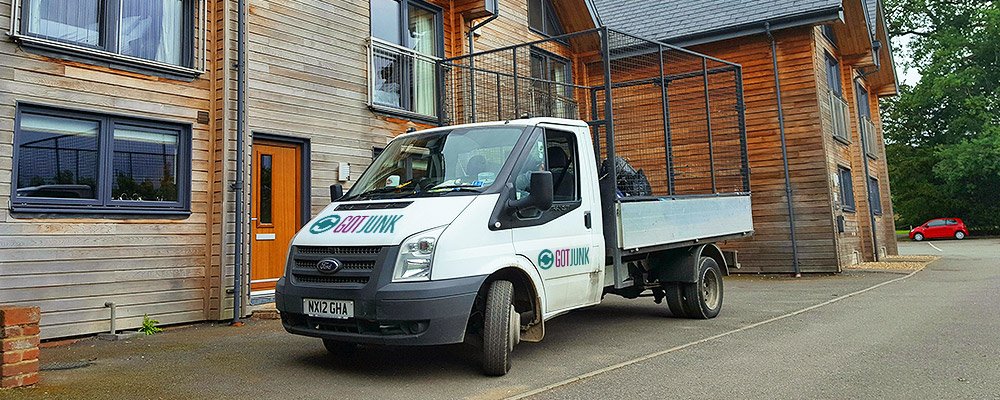
Rubbish Removal in London
Got Junk provides rubbish removal in London for households, businesses and properties where unwanted items need to be collected and taken away. The work can range from removing a collection of household rubbish to clearing larger quantities of furniture, stored belongings or mixed waste. Our rubbish removal and collection service provides a practical starting point when material has become difficult to manage through ordinary household disposal arrangements.
Every clearance is different because rubbish varies in volume, weight and type. Bags and boxes may be straightforward to move, while furniture, appliances and dense materials can require substantially more handling. The location of the waste also matters. Material stored beside an accessible entrance presents a different task from the same quantity carried downstairs, along corridors or from a rear garden with restricted access.
Got Junk operates in London and the wider Greater London area, with services covering household junk, garden waste, building-related rubbish and other suitable unwanted materials. The aim is to match the collection to what actually needs removing rather than treating every job as identical. Whether the requirement concerns one part of a property or a more extensive clear-out, the first step is establishing the type of waste, approximate amount and access conditions.
Junk Removal for Homes and Everyday Clear-Outs
Household junk can accumulate gradually in spare rooms, cupboards, garages and other areas that are not used every day. Old furnishings, boxes, broken belongings and miscellaneous unwanted items can eventually occupy useful space without fitting neatly into ordinary household bins. Our junk removal and disposal service is suitable when the main requirement is clearing these unwanted contents rather than emptying an entire property.
A useful household clear-out begins by deciding what should remain. Items being kept should be moved away from the rubbish where possible, particularly documents, photographs, keys, valuables and small personal belongings. It is not necessary to organise every discarded item perfectly, but obvious separation makes the collection clearer and reduces uncertainty about what is included. When several people use the property, this check is especially important.
The volume of junk is only part of the practical assessment. A smaller collection containing wardrobes, mattresses or other bulky objects can require more handling than many lightweight bags. Doorways, staircases and carrying distances can also affect the work. If you are preparing a clearance, identify the main items and the route out of the property before asking for a quotation so the requirement can be described accurately.
- Separate possessions that are staying from items being removed.
- Identify especially heavy, bulky or awkward objects.
- Check stairs, lifts, narrow entrances and communal areas.
- Keep important documents, keys and valuables aside.
- Mention unusual materials separately when describing the collection.
House Clearance and Larger Domestic Jobs
When unwanted possessions are spread throughout several rooms, a house clearance can be more appropriate than treating every object as an individual collection. Our house clearance service can cover furniture, stored household belongings and general unwanted contents from residential properties. The job may involve most of a property or only selected rooms, depending on what has already been sorted and which possessions need to remain.
House clearances often involve several different item types at once. Bedrooms may contain beds and wardrobes, living rooms can include sofas and cabinets, while storage areas may contain boxes and loose belongings that have not been reviewed for some time. Treating the property room by room can make decisions easier. Customers can identify what is staying first and then define the remaining contents as the clearance.
Access should be considered before larger furniture is moved. Items assembled inside a room may not pass through the doorway in their current form, while tight stairs or turns can create additional handling. The physical route matters as much as the number of items. A clear description of floors, entrances and larger furniture helps distinguish a straightforward household collection from a clearance requiring more extensive preparation.
Garden Waste and Outdoor Rubbish
Gardens can generate material that is difficult to deal with through ordinary indoor rubbish arrangements. Branches, cut vegetation, old planters, broken outdoor furniture and miscellaneous items left outside can accumulate after gardening work or a general garden clear-out. Our garden waste removal service provides a specific option when the principal requirement concerns suitable outdoor waste rather than household contents.
Access from the garden to the collection point
Outdoor waste can be easy to identify but awkward to remove. A rear garden may have a side passage, alley or direct access, but some properties require material to be carried through the house. Large bags, branches or outdoor furniture can therefore involve very different amounts of handling depending on the layout. Customers should describe both the material being removed and the available route from the garden to the vehicle.
Garden clearance should also be distinguished from landscaping or structural work. Collecting removable waste and unwanted outdoor items is different from excavating ground, constructing new features or demolishing permanent structures. Dense materials, unidentified containers and specialist waste should be mentioned separately rather than mixed into general garden rubbish. This keeps the collection focused on suitable materials and gives a clearer picture of what the job actually involves.
Builders Waste and Refurbishment Clearances
Building and refurbishment work can leave timber, packaging, fittings and other debris that needs to be removed once the main work is complete. Got Junk offers builders waste removal for suitable construction-related material. This category needs to be assessed differently from light household rubbish because dense waste can represent a substantial load even when it occupies comparatively little floor space.
Weight is particularly important when describing builders waste. Timber offcuts, tiles, fixtures and similar materials can require considerably more carrying than lightweight packaging or ordinary household junk. A useful description should therefore explain what the waste consists of rather than simply stating how many bags or piles are present. This makes it easier to distinguish a modest post-decorating clear-out from a larger refurbishment clearance.
Customers should identify materials that may need specialist handling rather than assuming everything from a building project belongs in a normal collection. Chemicals, unknown substances and suspected hazardous materials should be described separately. Mixed renovation debris should not automatically be treated as one uniform waste type. Defining the main materials at the quotation stage helps establish whether they fit the intended builders waste collection.
Waste Removal for Mixed Loads
A property may contain several kinds of waste at the same time, especially after moving, redecorating or clearing long-used storage areas. Boxes, rubbish bags, damaged furniture and assorted loose items can form a mixed collection that does not fit neatly into one category. Our waste removal service gives customers a broader option when the requirement extends beyond a small amount of ordinary household junk.
For mixed collections, it is useful to identify the dominant materials and any items that stand out because of size or weight. A room containing mostly bags with one heavy cabinet is different from a room filled with large furnishings. Similarly, dense waste should not be described solely by its visual volume. Providing an honest overview of the collection makes the practical requirements easier to assess before the work is arranged.
Some jobs are better understood as collection rather than a complete property clearance. Got Junk also lists a dedicated waste collection service for unwanted material that needs to be gathered and removed. The appropriate approach depends on whether customers are clearing rooms and furnishings or simply need identified waste taken away from a particular point on the property.
Waste Disposal and Different Material Types
Waste disposal covers a broad range of unwanted material, so the exact contents of a collection should be established before removal. Got Junk provides a dedicated waste disposal service alongside its other clearance options. Customers should explain whether the waste consists mainly of household junk, bulky furnishings, garden material, builders waste or a combination, as these categories can involve different handling requirements.
Bulky and unusual items need separate attention
Large furniture, electrical equipment and heavy objects can materially change a job even when most of the collection consists of ordinary rubbish. Door widths, staircases, lifts and carrying distances become particularly important once bulky items are involved. Before requesting collection, note anything that cannot easily be lifted by one person or moved through the property without extra handling. This gives a better indication of the work than a general description such as "several bags of rubbish".
Unidentified liquids, chemicals and other potentially specialist materials should be raised separately. An ordinary junk collection should not be assumed to cover every substance found in a shed, garage, basement or commercial unit. If there is uncertainty about an item, describe it before the clearance rather than placing it among general rubbish. This allows the collection to be defined around suitable waste without making unsupported assumptions about specialist disposal.
Skip Hire as an Alternative Waste Option
Some customers prefer to load waste gradually rather than have it collected as one prepared clearance. For these situations, Got Junk lists skip hire as another waste-management option. A skip can be useful when rubbish is being produced over a period of time, such as during ongoing work, because material can be added as the project progresses rather than gathered for one immediate collection.
Skip hire and direct rubbish removal solve different practical problems. With a collection service, the focus is on removing identified waste from the property. With a skip, customers generally need suitable space for the container and must decide how the waste will be loaded. The more appropriate option depends on the duration of the project, access, the amount of rubbish and whether waste is already gathered or will continue to be produced.
Where a skip would need to occupy a location subject to local controls, permissions may also become relevant. Got Junk provides information through its skip permit section. Requirements can depend on where a skip is positioned, so customers considering this option should distinguish between space available entirely on private property and situations where placing a container elsewhere may involve additional arrangements.
Rubbish Removal Across London
London's range of property types means rubbish removal can involve very different working conditions from one address to another. Got Junk lists dedicated coverage for Central London, where access can include flats, commercial premises and buildings with shared entrances. Regardless of the district, information about floors, lifts, loading access and carrying distance can be just as significant as the amount of rubbish itself.
The site's coverage also extends through Greater London, alongside separate regional pages for other parts of the capital. This broad coverage means the underlying service may remain similar while the practical conditions vary considerably. A collection from a suburban house with side access can be very different from one in a dense central location, even when both involve an equivalent amount of household rubbish.
When describing a London collection, the most useful details are the waste type, approximate amount and access to the property. Parking restrictions or longer routes from the premises to the loading point can affect handling, while upper floors may add stairs or lift requirements. These factors should be explained once at the quotation stage rather than discovered only when the rubbish is ready to be moved.
Planning the Collection and Requesting a Price
The practical requirements of rubbish removal depend on more than a single measurement. Volume matters, but so do weight, item type, access and the distance material must be carried. Got Junk publishes a dedicated prices page for customers considering the likely cost of their waste collection. The actual requirement should still be described clearly so the job can be assessed around the waste that is genuinely present.
Before making an enquiry, give a concise overview of the collection and identify anything unusually bulky or heavy. Photographs can help communicate the amount of rubbish, but they should be supported by information about stairs, lifts, narrow entrances or restricted access. If additional waste is added after the original description, mention the change before collection. Ask for a quotation once the main contents and access conditions are reasonably clear.
Got Junk provides rubbish removal, junk clearance, house clearance, garden waste removal, builders waste services, skip hire and related waste collection options across London. Choosing the right service starts with identifying what needs to go and how it can be reached. If you are ready to discuss your requirements and arrange the next step, contact Got Junk with details of the rubbish or clearance you need.
Frequently Asked Questions
- Canary Wharf E14
- Docklands E14
- Hackney E9
- Kingston upon Thames KT2
- Islington N1
- Finchley N3
- Tufnell Park N19
- Finsbury Park N4
- Harringay N4
- Camden Town NW1
- Marylebone NW1
- Bromley BR1
- Pimlico SW1
- Kentish Town NW5
- West Hampstead NW6
- Queen's Park NW6
- St John's Wood NW8
- Borough SE1
- Crystal Palace SE19
- Waterloo SE1
- Greenwich SE10
- Kennington SE11
- Bermondsey SE16
- Dulwich SE22
- Catford SE6
- Knightsbridge SW1
- Chelsea SW10
- Battersea SW11
- Mitcham CR4
- Balham SW17
- Barnes SW13
- Roehampton SW15
- Putney SW15
- Streatham SW16
- Tooting SW17
- Wandsworth SW18
- Colliers Wood SW19
- Wimbledon SW20
- Brixton SW9
- Brompton SW3
- Clapham Park SW4
- Clapham SW4
- Clapham Common SW4
- Croydon CR9
- Earls Court SW5
- Fulham SW6
- Parsons Green SW6
- Kensington SW7
- South Kensington SW7
- South Lambeth SW8
- Stockwell SW9
- Richmond upon Thames TW9
- Kew TW9
- North Sheen TW9
- Enfield EN1
- Barnet EN5
- Harrow HA2
- Ruislip HA4
- Pinner HA5
- Edgware HA8
- Ilford IG1
- Kingston KT1
- Sutton SM1
- Twickenham TW1
- Hounslow TW3
- Richmond TW9
- Uxbridge UB8
- Westminster W1
- Mayfair W1
- Soho W1
- Notting Hill W11
- West Kensington W14
- Hammersmith W12
- Holland Park W14
- Paddington W2
- Acton W3
- Ravenscourt Park W6
- Maida Vale W9